

Despite Gulf disaster, deepwater oil is all we have left
The race is on: can we extract the last remnants of Western oil from such unlikely places as the ocean floor before the global economy picks up enough to test out the hypothesis that supplies have already peaked?
read more
New UK Energy Minister and the Continuing Decline in Energy Production
The UK Department of Energy and Climate Change (DECC) published their quarterly Energy Trends document last week. It covers up to the first quarter 2010. The key points:
- Total energy production in Q1 2010 was 6.5% lower than in the first quarter of 2009.
- Oil production fell by 6% compared to the first quarter of 2009.
- Natural gas production was 9% lower compared with the first quarter of 2009. The UK was a net importer of gas in the first quarter of 2010 by 155 TWh compared with 106 TWh in the first quarter of 2009.
- Coal production was 12.5% lower than a year earlier.
- Nuclear’s supply increased by 1% on the first quarter of 2009.
- Wind, hydro and other renewables supplied 6.5% less electricity than in the same period last year, with hydro down 44% as a result of less rainfall.
- Final energy consumption rose by 4% between the first quarter of 2009 and the first quarter of 2010, with rises in all sectors except transport which fell mainly due to the adverse weather conditions.
- Gas demand was 13% higher than a year earlier.
- Electricity consumption was 2.5% higher in the first quarter of 2010 compared to the same period last year.
It’s a familiar story: every year the UK’s primary energy production declines significantly. Today, primary energy production is almost half what it was at the peak just a decade ago. Has any other country, let alone major economy experienced such a speed and magnitude shift in its energy system outside wartime?
The rises in the demand data above are largely due to the colder winter and a degree of recovery from the recession. One could argue the decline in indigenous production played a role in the recession. If it did, I suggest it was a small role.
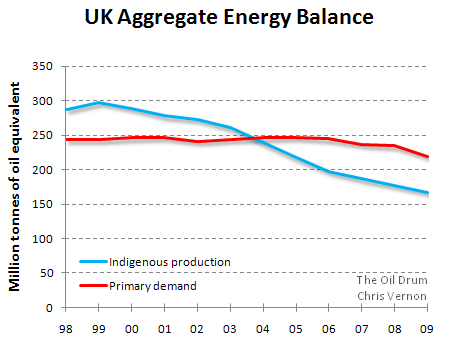
Data from DUKES 1.1-1.3.
The annual energy deficit in 2008 was 57.5 million tonnes of oil equivalent (mtoe). That’s a lot of energy to import. The breakdown of this deficit in 2008 was 42% coal, 36% gas and 19% oil. Let’s just make a quick estimation on how much this is costing:
| Fuel | Percentage | Deficit (mtoe) | 2008 Cost/toe (£) | Total Cost (£bn) |
| Coal | 42% | 24.15 | 115 | 2.77 |
| Gas | 36% | 20.70 | 191 | 3.95 |
| Oil | 19% | 10.92 | 287 | 3.14 |
| Total | 9.86 | |||
UK Energy Deficit 2008. Energy data from DUKES 1.1-1.3. Prices from QEP 3.2.1.
In 2008 the gap cost the UK approximately £10 bn. Fuel prices were a little lower in 2009 (especially coal and gas at -17% and -15% respectively) and the recession closed the gap from 57.5 to 53 mtoe. A few years ago the energy sector was a net source of income for the UK. No longer. The government deficit and the growing debt is receiving the media attention, this energy deficit, now it its fifth year remains largely ignored.
Following the May election, the UK now has a new Energy Minister:

Chris Huhne MP, Secretary of State for Energy and Climate Change.
On the 24 June 2010, Huhne gave a speech to the Economist UK Energy Summit, it can be watched here: VIDEO
Did he address the chart above, our energy deficit in the same way chancellor George Osborne had addressed the fiscal deficit in his emergency budget earlier in the week? Well no, not directly. Economic recovery, energy security and climate stabilisation were identified as the key challenges. He isn’t a politician to question growth but did address the type of growth. “…dependence on fossil fuel would be folly. It would make us vulnerable to oil price spikes and volatility.” He called for a decarbonised economy stimulating growth and delivering on climate change and energy security. Sounds good but surely it is having one’s cake and eating it?
After stressing the urgency and seriousness of climate change Huhne addressed energy security. “It is vital we make the most of our domestic oil and gas assets…” indicating at least 20 billion barrels oil equivalent remain in UK waters and that we must continue to invest in exploration. His first mutually exclusive objective of delivering growth through decarbonising is now joined by his second of addressing climate change whist continuing to explore for new fossil fuel resources.
£200 bn of energy investment was said to be needed over the next decade, largely to replace existing assets. On new nuclear, Huhne stressed it will go ahead, but only if it can do so with no public subsidy. In my opinion this all but rules out nuclear as there is little precedent for wholly privately funded nuclear, but we shall have to wait and see. Whatever happens, it will be late with respect to the decommissioning schedule of the existing fleet of nuclear power stations.
Efficiency was described as the fourth energy resource (relegating nuclear and renewables to 5th and 6th?)-the cheapest way of closing the energy gap between demand and supply – “the Cinderella of the energy ball”. Smart meters and grids received a nod but he focused mainly on the existing aged housing stock. “Most of the homes in use in 2050 have already been built … we used more energy heating our homes than Sweden, where average January temperatures are 7 degrees Celsius lower than ours.” Addressing existing homes will be Huhne’s flagship programme. He’s talking about insulating millions of homes. It seems the improvements will be funded at least in part through the energy savings and recovered directly from household utility bills.
“The era of cheap energy is over. …tomorrow’s energy bills will undoubtedly be higher”
When asked about the lights going out, he ruled out wind and nuclear coming to the rescue due to the timeframe, but he stated gas fired power stations can be built in 18 months and assured us the lights wouldn’t go out on his watch. Carbon capture and storage (CCS) was described as vital to meeting climate objectives whilst keeping the lights on.
So in summary, Huhne didn’t address the fundamental peaking of energy supplies which surely should be the key driver for national energy policy today. The inconsistencies of shooting for growth whilst reducing energy use along with addressing climate change (by which I can only assume he means reducing carbon emissions) while encouraging future exploration for oil and gas are glaring. Meinshausen et. al. showed in their Nature paper last year the world has more than enough proved fossil fuel reserves already from a climate change point of view without having to discover more. His enthusiasm for CCS is also worrisome and I would see as largely incompatible with energy peaking scenarios. His focus on energy efficiency and especially domestic energy use is positive though. However there was no mention of transport at all.
New government, new minister but we still seem little closer to recognising the challenges ahead.

BP’s Deepwater Oil Spill - Closing in on the Well - and Open Thread
Well with Alex trundling off towards Mexico, the second area of concern having dissipated, and the two +3 earthquakes in Iceland being North of the island, or up around Loki, the worry over the impact of natural hazards can be set back just a little today. Which is helpful, given that the relief well is approaching the point where it might soon bring this sorry episode a lot closer to the end game.
Total recovery from the BP site has been relatively consistent in the immediately recent past:
For the last 12 hours on June 27 (noon to midnight), approximately 8,340 barrels of oil were collected and approximately 4,100 barrels of oil and 28.8 million cubic feet of natural gas were flared.
On June 27, total oil recovered was approx. 24,450 barrels:
approx. 16,275 barrels of oil were collected,
approx. 8,175 barrels of oil were flared,
and approx. 56.2 million cubic feet of natural gas were flared.Total oil recovered from both the LMRP Cap and Q4000 systems since they were implemented is approx. 438,000 barrels. An additional 22,000 barrels were collected from the RIT tool earlier in May bringing the total recovered to approx. 460,000 barrel.
Connections for the first free standing riser have been completed and this will be connected to the Helix Producer - “a redundancy measure also taken under the direction of the Federal Government.”
The first relief well has now drilled to a depth of 16,545 ft - which puts it within about 150 ft of the point where the first connection may be tried, so I suspect the drill might be being turned horizontal. (Remember that it has to hit with an accuracy of about an inch). They may be steering it with a device called an Autotrak system where, just behind the drill bit (which is rotating - as are the main pipe segments - yellow in the picture below) a non-rotating piece of equipment is located (blue) that has three small rams that can push out against the well bore and direct the drilling head over in the direction required.
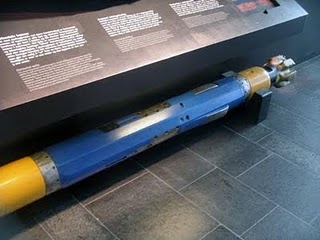
Autotrak assembly (Oil Museum in Stavanger) - you can see one of the pads pushed out as though it was pushing the head over.
This also implies that the last cement job was tested out satisfactorily, after the cement had set.
Update by Gail Tues. am According to Bloomberg, Alex may result in some delays in additional oil collection:
BP needs about three more days to connect a new cap that will feed crude from the leaking Macondo well to the Helix Producer, a vessel that can capture 20,000 barrels to 25,000 more barrels a day beyond the London-based company’s current containment capacity, said senior vice president Kent Wells.
As the work can only be completed in flat seas, Alex could cause a seven-day delay in connecting the Helix, he said. The work was to be completed by July 7, he said yesterday.
The waves may swell to as high as 12 feet in 36 hours, pushing oil into the Gulf Coast wetlands, Coast Guard Admiral Thad Allen, the U.S. government’s national incident commander, said. Allen said he doesn’t think current operations to capture spilled oil will be affected.
BP’s Deepwater Horizon - More Insights Relating to DougR’s Comment and Flow Rates
I thought I would combine a couple of shorter posts, relating to the same general topic-the issue of whether the Deepwater Horizon spill could be much worse than is being reported. I hope this isn’t too confusing. The two posts are
1. Estimated Oil Flow Rates From the BP Mississippi Canyon Block 252 “Macondo” Well by Oil Drum staff member Art Berman, and
2. BP’s Responses to Questions Raised by Commenter “Shelburn” by guest poster Shelburn
Neither of these authors find evidence that the spill could be much worse than is being reported. Shelburn asks readers what additional questions we should be asking BP.
Estimated Oil Flow Rates From the BP Mississippi Canyon Block 252 “Macondo” Well
by Art Berman (aeberman)
Estimates of flow rates for the BP Mississippi Canyon Block 252 “Macondo” well now range from 1,000-100,000 barrels of oil per day (bopd). Initial estimates were 1,000 bopd. These increased to 3,000 bopd and then to 5,000 bopd. Now the U.S. Geological Survey believes the well is flowing 20,000-40,000 bopd but other experts believe that flow rates may be as high as 60,000 bopd. Some have even suggested rates as high as 100,000 bopd, and others as high as 250,000 bopd. The purpose of this post is to provide a calibration framework for what flow rates are probable.
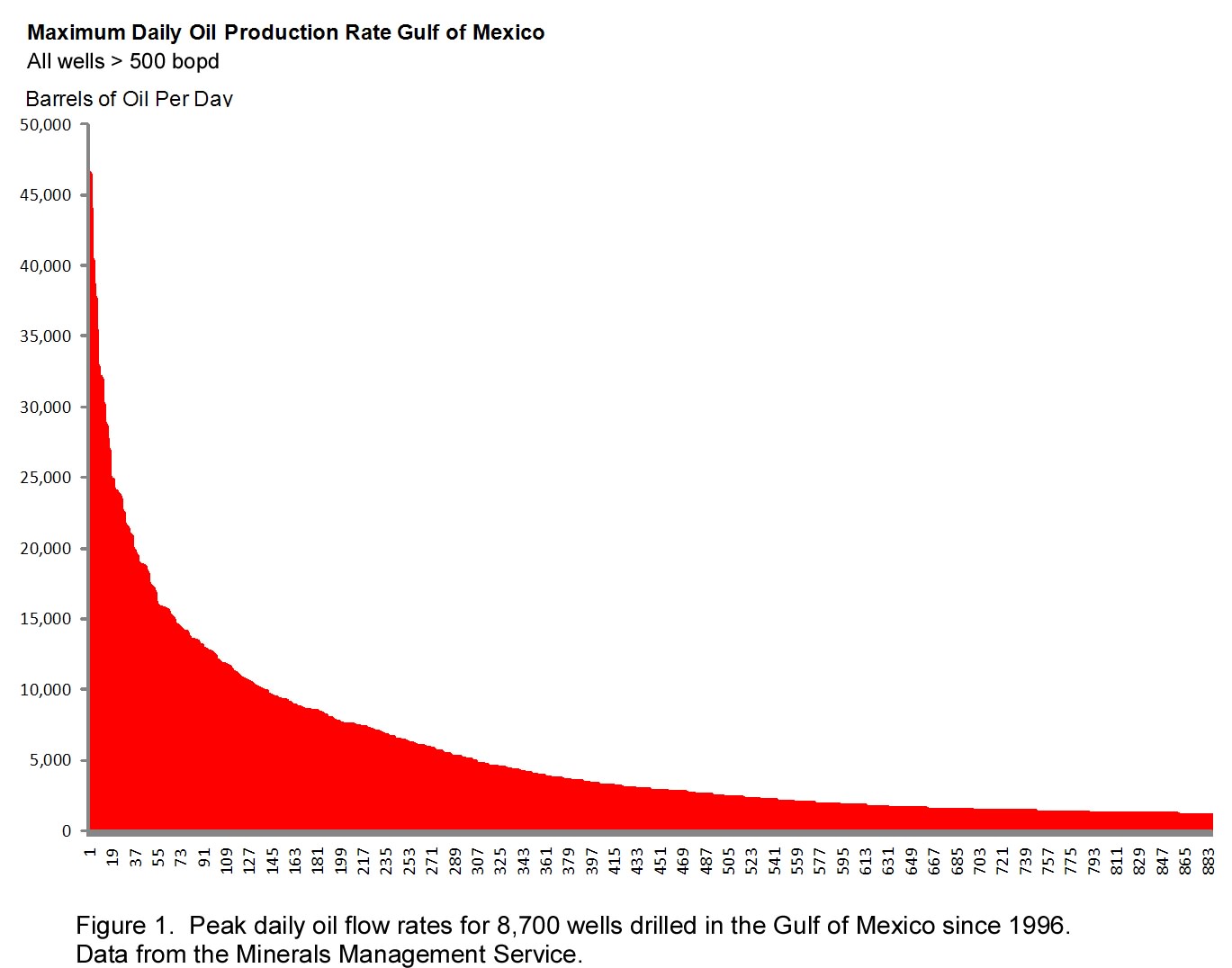
More than 8,700 wells drilled in the Gulf of Mexico since 1996 were evaluated using publicly-available production data from the Minerals Management Service (MMS). Wells in the deepwater Gulf of Mexico dominate the highest flow rates in this data set. Approximately 4,000 wells have been drilled in water depths more than 1000 ft, and more than 700 in more than 5,000 ft of water during the past 20 years. The Macondo well was drilled in 5,067 ft of water to a total depth of 18,360 ft below sea level.
Historical Context for High Flow Rates in the Gulf of Mexico
The highest flow rate for a single well in the Gulf of Mexico is 46,467 bopd (Figure 1) based on the daily average of the peak month of production.
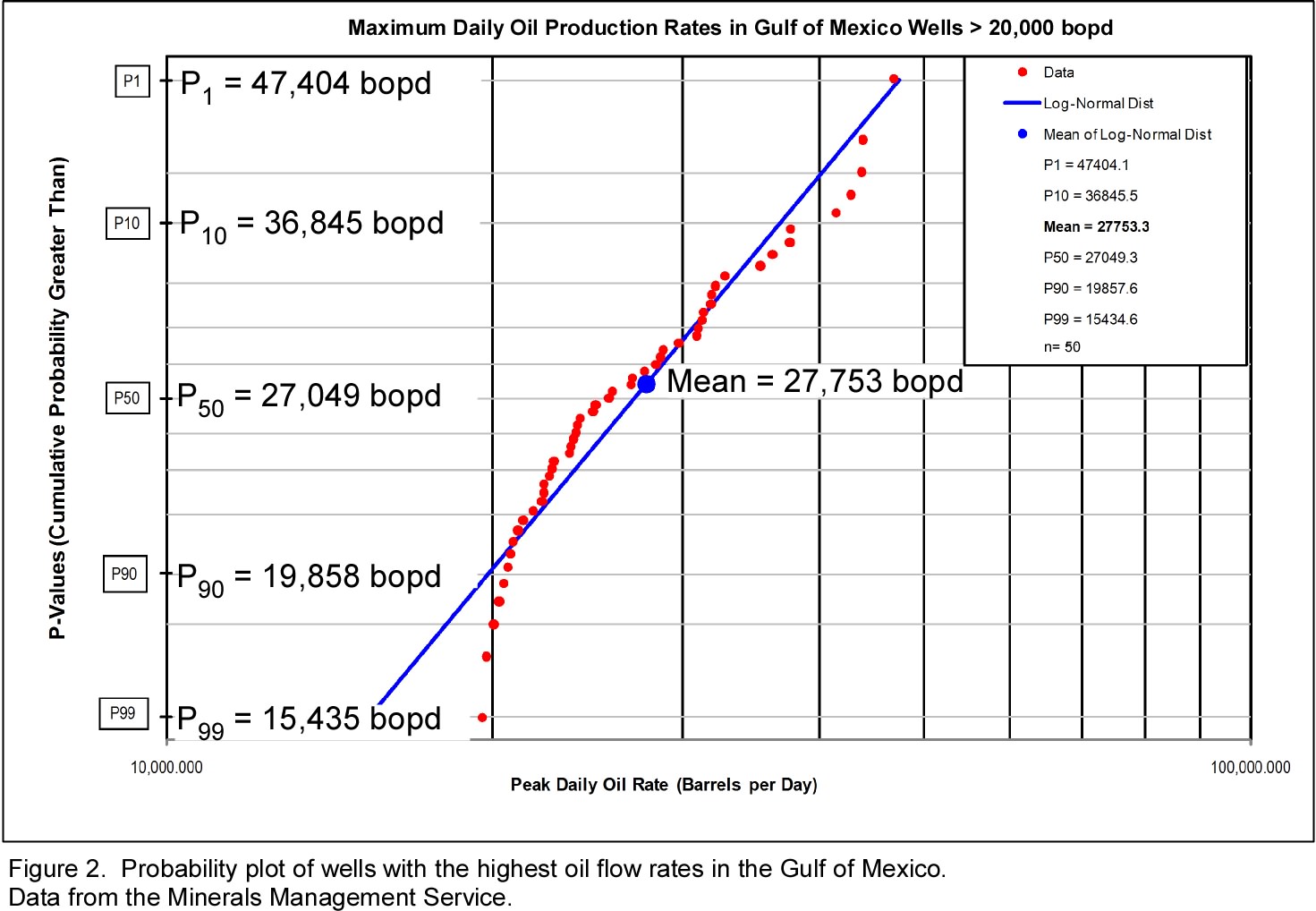
The mean of the 50 wells with the highest oil flow rates is 27,753 bopd . A probability plot (Figure 2) of these wells indicates that the most likely case is about 27,000 bopd (P50). There is a 10% probability (P10) that a well will produce approximately 37,000 bopd, and a 90% probability (P90) that it will be about 20,000 bopd.
There is no historical precedent for a single well producing more than 100,000 bopd. Among historical blowouts, the highest flow rates known are approximately 100,000 bopd at the Spindletop Field in Texas in 1901, the Midway-Sunset Field in California in 1910, the Long Beach Field in California in 1910, and the Lake Maracaibo Field in 1922. These were all open-hole completions drilled without casing or drilling fluid so they represent maximum unconstrained flow rates.
The BP “Worst Case Scenario” Document
An internal BP “worst-case scenario” document released June 20 has been mis-interpreted by some to indicate that the company believes that flow rates as high as 100,000 bopd are possible. The document states that the probable range is 5,000-40,000 bopd. It further states that the maximum theoretical rate is 60,000 bopd. It is important to note that these values represent unconstrained, open-flow rates that might be expected after removing the BOP from the well, and are estimated to be at least 10,000 bopd more than present flow. The 100,000 bopd rate assumes that flow is occurring within the production and casing and around the annulus. It again is an unconstrained rate.
The Most Likely Case
We know that the well is producing at least 25,000 bopd because that much has been collected in a single day. It is impossible to know the flow rate until the well is brought under control and rates and pressures can be measured. It is possible that the welll is flowing at a rate 25% higher rate than any well drilled to date (60,000 bopd) in the Gulf of Mexico, but it is not likely. It is less likely that it is flowing at 110% of the rate of the highest rate well so far (100,000 bopd). It is reasonable that it may be among the highest rate wells, and was initially flowing at 40,000-50,000 bopd.
BP’s Responses to Questions Raised by Commenter “Shelburn”
by commenter shelburn
A few days ago Gail posted a copy of a comment I had made the day before as the main posting. It was titled, BP’s Deepwater Oil Spill - Response to DougR’s Concerns - and Open Thread http://www.theoildrum.com/node/6655 and http://www.theoildrum.com/node/6659
In that thread, as a side issue I took BP and the government to task for not releasing more technical information and listed about 10 hypothetical questions I would like to ask BP based on the content of the posting about DougR’s claims that the BOP was in immediate danger of tipping over and causing catastrophic damage.
I was quite surprise when yesterday Gail informed me that TOD had received a response, well, a partial response, to the list of questions. Below is the Unified Area Command response:
Subject: RE: Response to DougR’s Concerns
Hello,
In your site’s June 25 post discussing the Deepwater Horizon oil spill, http://www.theoildrum.com/node/6659 guestblogger “shelburn” asked a number of questions. We passed these on to BP and have obtained answers for some of them and thought you would like to share them with your readers:
Q: has the inclination of the BOP changed?
A: NoQ: Are you concerned about the structural integrity of the BOP, wellhead or LMRP?
A: NoQ: What are the ROVs doing when they are looking at the seabed?
A: There are a number of ROVs at work at the site so it depends on which ROV the viewer is referring to. As we prepare to set new equipment and flexible hosing on the seafloor, however, ROVs are often used for route planning. During those exercises the ROVs are used to scan the seafloor to ensure that there are safe and stable places to position equipment and flexible hosing.
Q: Is there any indication of seabed movement at the base of the BOP?
A: No.If you have any additional questions please let us know.
Sincerely,
Tech. Sgt. Alec Lloyd
Unified Area Command
Deepwater Horizon Response
I was surprised there was a response as, to the best of my knowledge, BP has not previously responded to any internet websites or blogs.
I would have hoped for a more complete and technically oriented response but at the same time am highly encouraged by the fact there was any response at all, and that they answered the most critical questions to refute the wild speculations by DougR that was causing considerable stress to Gulf Coast residents.
The most important fact is that there is no, absolutely no, evidence of washout, subsidence or leakage around the wellhead and blowout preventer (BOP). Without that all DougR’s his arguments fall completely apart.
It is interesting the questions they didn’t answer. They dropped “casing” from the list of items of structural integrity. It is almost a clear answer that they are concerned about the casing integrity - no real news there for readers of The Oil Drum. Along the same line they did not respond to any other questions about downhole leakage. This is a list of my questions they did not answer:
Describe the “disk failure” at 1,000 feet.
Are you concerned about the structural integrity of the casing?
Describe the formation levels.
What are the current pressure readings inside the BOP?, the historical readings?
What is the little black box the ROVs place on the riser?
Personally, I was most interested in the historical pressure readings at various levels in the BOP and still hope that information will be made public.
I would like to thank BP for this amount of information they did release and encourage them to enlarge the information exchange.
To that end I would suggest The Oil Drum posters to compile a list of technical questions we would like to ask BP. Maybe through the comments section we could narrow down a list of 20 or so questions that The Oil Drum feels that BP could answer that would be most beneficial to transmitting factual data to the general public. Having watched the main stream media mangling of what information they are given, just possibly, having some technical information go through the Oil Drum “review process” would generate a higher quality of communication than we have seen to date.
We know that BP, for legal reasons, is not going to comment about what caused the original blowout or steps that were taken onboard the Deepwater Horizon, and for proprietary reasons they may be reluctant to discuss specifics of various formations. But it would seem that most other data, subsequent to the sinking of the Deepwater Horizon, would be available.
Storm Watch, 29 June 2023
4pm Update
Model guidance continues to converge on the Northern Mexico coast. Alex may be a minimum hurricane now, but has not blossomed as many forecasters were expecting - looks like the models were right about that, at least. The last few hours the storm has been wobbling almost due west - look for NHC to adjust the track a bit south at 5pm.

As noted below, other than the precautionary shut in’s, we are not expecting any significant damage to energy production from this storm. As for the Deepwater Horizon response, connection of additional oil capture capacity is being delayed by waves. The waves are already causing problems for the oil spill cleanup efforts, with the Coast Guard recalling all of the skimmer boats. I expect further problems from the waves in the form of damaged and overtopped protective booms, and for oil to wash up in previously untouched areas due to wave induced longshore currents. While there may be some mixing and dispersion, I think Alex is causing more harm than good.
This will be the last special post on Alex unless something weird happens. See you next time!
Original Post
As of 7am ET, Alex is just short of hurricane strength, moving slowly northwest, and continues to develop slowly. It should be declared a hurricane later today. Track guidance has consolidated somewhat, with most of the reliable models showing landfall in northern Mexico or South Texas. Hurricane Warning are now up for these coasts (Note that this year Warnings are issued at 36 hours - in previous years, a “warning” was not issued until the storm was 24 hours out). A turn more westward is anticipated today or tomorrow. There is still some uncertainty as to when and how sharp that turn will be. The two yellow lines in the map below are NHC’s main computer models - with the red official track splitting the difference. Alex may reach Category 2 strength (winds near 100mph) before landfall.

There is now very little to no chance the storm will significantly impact either the relief wells or capture efforts at the Deepwater Horizon site. The waves and winds may slow things down a little, but not seriously. Cleanup efforts will certainly be adversely impacted by waves for several days. The question is how bad, and that depends on how strong Alex becomes, and the exact track. It is likely the Gulf will be churned up for a few days. Even relatively small (3ft) waves are rough on protective barriers like booms, and make skimming difficult. The swell can also induce currents in the near shore area, which will move the oil around without dispersing or mixing it. Production impact discussion is below the fold - bottom line, some short term shut in, no long term damage.
Estimated Production Impact
On the current tracks, we (Kinetic Analysis Corporation) do not expect any long term impact on either production or refining. Peak shut in for oil is estimated at about 10%, Natural Gas 15%, of daily production. Numerous companies have evacuated personnel and made precautionary shutdown on the offshore fields south of Corpus Christi Texas. Our models show only minor damage potential, and that on older facilities. (By the way, for those new to oil/gas discussions, the term “shut in” is used because the production isn’t really “lost”, it’s just “shut in” to the ground while we wait for the storm to pass and the facilities repaired. We’ll get it out eventually - just not when we want it.) PEMEX stopped exports from some terminals, but apparently there was no production impact.
We’ll update this thread during the day as conditions warrant.
Drumbeat: June 29, 2023
Gulf gas shortage threatens oil production
Gulf states seeking to prolong the lives of aging oilfields face a big problem: insufficient gas to pump in to maintain their crude output. And the problem is rapidly worsening.
The UAE last year was injecting 1.7 billion cubic feet per day (cfpd) of gas into oilfields to maintain production levels. The need for gas for this purpose could increase by as much as 8 per cent per year annually for the next decade said Fereidun Fesharaki, the vice chairman of the consulting firm FACTS Global Energy.
By 2020, demand could reach 4.2 billion cfpd, approaching the nation’s total current gas output from onshore fields.
If Abu Dhabi, the nation’s main producer, had not pledged most of its offshore gas output to supply Asian customers under long-term contracts for liquefied natural gas, that might not be so serious. But according to Mr Fesharaki, the UAE, along with Saudi Arabia, Kuwait and Oman, is “out of gas”. If it used all the gas it will need to maintain oil production, then it would fall short of gas for power generation and industry.
Gulf gas sector must see the light to exit dark age
When even the ministry of electricity and water suffers a blackout, you know there is a problem.
As Kuwait’s grid reached 99 per cent of capacity recently, fires broke out in transformers and working hours were cut.
It is not only Kuwait that is suffering. Recent weeks have brought nothing but bad news for the Gulf’s gas and power sector: not just isolated incidents but a sign something is badly wrong.
US set to be big buyer of gas from Middle East
The US will emerge as the second-biggest market for Middle Eastern natural gas exports in two decades if a uniform global market for gas continues to develop, according to a new study by the Massachusetts Institute of Technology (MIT).
The forecast counters the prevailing view in the gas industry that the recent spike in US domestic output could permanently close the door to large-scale imports. Multibillion-dollar US import terminals for liquefied natural gas (LNG) are sitting dormant while Qatar, Algeria and other major exporters scramble to find alternative markets willing to pay higher prices.
Natural Gas as Panacea: Dubious Path to a Green Future
Many energy experts contend natural gas is the ideal fuel as the world makes the transition to renewable energy. But since much of that gas will come from underground shale, potentially at high environmental cost, it would be far better to skip the natural gas phase and move straight to massive deployment of solar and wind power.
X Prize’s multimillion-dollar challenge for Gulf oil solutions
The X Prize Foundation announced today that it is developing a multimillion-dollar “oil spill cleanup X challenge” to come up with solutions to cleaning up shorelines and open water fouled by oil leaking from the BP Deepwater Horizon rig in the Gulf of Mexico.
Avertible catastrophe
Some are attuned to the possibility of looming catastrophe and know how to head it off. Others are unprepared for risk and even unable to get their priorities straight when risk turns to reality.
The Dutch fall into the first group. Three days after the BP oil spill in the Gulf of Mexico began on April 20, the Netherlands offered the U.S. government ships equipped to handle a major spill, one much larger than the BP spill that then appeared to be underway. “Our system can handle 400 cubic metres per hour,” Weird Koops, the chairman of Spill Response Group Holland, told Radio Netherlands Worldwide, giving each Dutch ship more cleanup capacity than all the ships that the U.S. was then employing in the Gulf to combat the spill.
To protect against the possibility that its equipment wouldn’t capture all the oil gushing from the bottom of the Gulf of Mexico, the Dutch also offered to prepare for the U.S. a contingency plan to protect Louisiana’s marshlands with sand barriers. One Dutch research institute specializing in deltas, coastal areas and rivers, in fact, developed a strategy to begin building 60-mile-long sand dikes within three weeks.
Oil Chiefs Leave Meeting with Interior ‘Disappointed’
Executives from oil and gas companies on Monday concluded an hour-long meeting with U.S. Interior Secretary Ken Salazar without securing promises from the government to lift a deepwater-drilling moratorium imposed after a disastrous BP oil spill.
BP chief calls for considered response to Gulf blame
The managing director of BP North Sea told his staff yesterday that a rushed judgment on who was to blame for the Gulf of Mexico oil spill would help no one.
Expanding deepwater drilling was BP’s top priority
WASHINGTON: BP staked its future on expanding offshore drilling a month before the catastrophic explosion on the Deepwater Horizon triggered the United States’s worst environmental disaster, according to company documents revealed this week.
The website ProPublica published a March 2010 strategy document in which BP named ”expanding deepwater” as its number one area for long-term growth.
McCain Introduces Bill to Repeal Jones Act
Last Friday, U.S. Senator John McCain (R-Ariz.) introduced the “Open America’s Water Act,” which would repeal the Jones Act. McCain’s statement follows:
“Today I am pleased to introduce legislation that would fully repeal the Jones Act, a 1920s law that hinders free trade and favors labor unions over consumers. Specifically, the Jones Act requires that all goods shipped between waterborne ports of the United States be carried by vessels built in the United States and owned and operated by Americans. This restriction only serves to raise shipping costs, thereby making U.S. farmers less competitive and increasing costs for American consumers.”
France’s Total to stop gasoline shipments to Iran
PARIS—France’s Foreign Ministry has praised the decision by French oil giant Total SA to cease gasoline exports to Iran because of increased international sanctions over its nuclear program.
Joint conclusion of the EU-OPEC Energy Dialogue
During his introductory keynote speech, the EC Commissioner for Energy, Günther Oettinger, highlighted the need for the EU to respond in a compelling manner to those European citizens who felt uncertain or threatened by oil production activities in EU waters. The best answer to these rightful concerns was, he said, to openly discuss all relevant factors, and express the will to take all necessary measures to improve safety. This is what the Commission, the European Parliament and EU Member States were doing currently. To ensure the highest quality of actions taken, the EC considers that close cooperation with all relevant partners is a crucial factor. In this connection, the Commission is proposing to organize a joint EU-OPEC roundtable with the aim of exchanging views on this crucial matter.
An ignored sector
Instead of inflationary spikes, it is the decrease in per capita output in the agriculture sector that ought to worry policymakers.
Interview with Jeff Rubin, Part 2
POR: Is there a growing number of economists who are getting the resource depletion story, or is it still business as usual?
Rubin: I think more economists are coming around. I can just see that from the number of economists who respond to my blog. I think what’s happening is that economists are beginning to realize that, yes, the supply curve-meaning, the higher the price of oil, the more oil we’ll find-has a big problem in that much of the new oil that we’ll find, like tar sands or deep water, we won’t be able to afford to burn. Economists’ responses will be that $150 oil will give us new forms of supply but that those prices will send a lot of motorists to the sidelines. Sure, we can produce 4 or 5 million barrels a day out of the Athabasca tar sands or Venezuela’s heavy oil, but the prices to produce it translate into $7-a-gallon gasoline. Can we really afford to burn that? They are starting to understand that depletion is more an economic term than a geologic term because we not going to hit the absolute limit of oil supply; as we’re keep drilling towards the bottom of the barrel, it’s going to get too expensive to bring out what’s left.
Live Dangerously: 10 Easy Steps
When Shannon Hayes made a list of easy steps for becoming a radical homemaker, she didn’t realize just how revolutionary they were.
Redesigning Civilization after the Stress Tests
The BP oil gusher should remind us that our civilization relies on unseen, not very well understood forces, especially energy and the environment, for our day-to-day economies.
Our institutions and communities have recently failed stress tests that pushed system designs beyond intended limits: whether it’s toxic exurban real estate assets, climate-altering pollution or deepwater oil drilling.
Jan Lundberg: The End Of Oil, And Government
The unsustainable U.S. economy and coast-to-coast consumer society that uses more oil than any other nation will keep up its energy gluttony until supplies give out.
Because oil is the most critical part of our energy mix, and it supplies critical materials and chemicals besides fuels, a sudden, crippling oil shortage can paralyze most of the work, commerce and law enforcement going on in this country. Activities such as driving to church or to the beach to clean oil off dying birds will also mostly cease virtually overnight.
The Population-Poverty Connection By Lester R. Brown
The 21st century began on an inspiring note: the United Nations set a goal of reducing the share of the world’s population living in extreme poverty by half by 2015.
By early 2007 the world looked to be on track to meet this goal, but as the economic crisis unfolds and the outlook darkens, the world will have to intensify its poverty reduction effort.
Imagining a World Without Oil
The current issue of Scientific American puts the BP oil spill into global perspective. It perhaps explains why the public seems to be more concerned about the impacts than the government, members of Congress, and those in the oil industry and those who support offshore oil drilling.
Apocalypse later: Ray Kurzweil predicts the not-so-near future in ‘post-biological’ visions of humanity
NEW YORK — I have seen the future, and it is long-winded, narcissistic, and — thank heavens — still far off.
“Welcome to the future,’’ was how the emcee greeted me and about 400 guests attending the New York premiere of Ray Kurzweil’s forthcoming movie, “The Singularity Is Near.’’
Naturally, you wonder:
1. What is the Singularity?
2. Is it near?
3. Should I suspend my newspaper delivery and donate the proceeds to my school’s literacy program?
Government-ordered biofuels inviting a water crisis, Nestle chairman warns
EDMONTON - Governments that impose biofuels regulations as a remedy for C02 emissions are doing more harm than good, the chairman of Nestle SA said Monday.
To meet the 20-per-cent biofuel requirement in gasoline and diesel that some governments have set, food production would have to triple right away, and that’s impossible, said Peter Brabeck-Letmathe.
Nuclear energy the answer?
It seems odd at first sight to understand why Pakistan, a country that can make nuclear weapons and ballistic missiles, and has an atomic energy commission that employs over 30,000 people, has electricity blackouts.
Iraqi Energy Protests Grow
The interim Iraqi government is reeling from riots and demonstrations that have erupted across the country to protest severe electricity shortages.
Anger has been growing for weeks over the continued power cuts and rising fuel prices - resulting from the demand for generators - and the stalled efforts to form a new government.
NOC curtails oil imports
KATHMANDU: Nepal Oil Corporation (NOC), which is reeling under oil loss, has resorted to pressure tactics and sharply cut the import of petroleum products in a bid to exert pressure on the government to adjust fuel prices.
Pakistan: Shutter down at 8p.m. frustrating buyers, sellers alike
“We have won democracy after a prolonged struggle against dictatorship. We now expect the government to offer us some relief rather than imposing dictatorial decisions like shutter down at 8 p.m., which has inflicted losses to the tune of 80% to my business,” complains Izhar Khan of ‘Fashion Affairs.’
Oil Drops Most in Three Weeks on Forecast China Growth Slowing
(Bloomberg) — Crude oil fell the most in more than three weeks amid concern that the economy in China, the world’s fastest-growing energy consumer, is expanding at a slower pace than previously estimated, lessening its need for fuels.
Oil lost as much as 3.8 percent as the Conference Board corrected its April gauge for the outlook on China’s economy, saying it rose by the smallest amount since November. Equity markets declined and the dollar strengthened against the euro, curbing the appeal of commodities as an alternative investment.
Iran-Pakistan pipeline boon for region
ISLAMABAD, Pakistan (UPI) — A planned natural gas pipeline from the South Pars gas field in Iran will help Pakistan find relief for a looming energy crisis, an Iranian envoy said.
First deliveries of natural gas through the pipeline are expected in Pakistan by 2015. Islamabad has contracted 750,000 cubic feet of gas per day through the pipeline under the terms of the 25-year deal.
Which oil companies are more eco-friendly than the rest?
Back in April, a reader asked which gas station was the most eco-friendly choice, and BP came out pretty high on the Lantern’s list. We don’t need to crunch the numbers again to know that the company formerly known as “Beyond Petroleum” has gone from hero to zero with a series of preventable missteps that led to the spilling of as much as 179 million gallons of crude into the Gulf of Mexico. The Deepwater Horizon blowout now threatens our coastline and fisheries in what President Obama called a “massive, unprecedented environmental disaster.”
Bill McKibben: Oil Spill Is an Opportunity for Americans
The spill presents an opportunity for Americans to demand better leadership on energy and the environment, and to become leaders themselves, says McKibben, a best-selling author. “This is one of the moments when we’re offered an opportunity to really see what’s going on in the world,” McKibben says. The fact that the Deepwater Horizon rig was seeking oil more than a mile below the ocean floor means we’re running out of oil, he argues. “Even if that oil made it safely to shore and got burned in the gas tanks of our cars, it would be an environmental catastrophe,” McKibben adds, noting that we have just lived through the 12 warmest months on record.
Here’s Bill McKibben on how each of us can take part in leading America into a sustainable energy future.
Exxon, Shell May Consider Possible Bid for BP, JPMorgan Says
Exxon Mobil Corp. and Royal Dutch Shell Plc may consider bidding for BP Plc after the London-based oil company lost more than half of its market value in the wake of the Gulf of Mexico oil spill, JPMorgan Cazenove Ltd. said.
Exxon Mobil has the stronger balance sheet and proven ability to integrate a large transaction, according to Fred Lucas, a London-based analyst at JP Morgan. It could make a cash and share offer, valuing BP at 473 pence a share compared with yesterday’s close of 308.25 pence, and including a $50 billion spin-off of BP’s downstream assets, according to JPMorgan.
Senior US energy official says ‘tragic’ Gulf oil spill underscores need to shift to renewables
(AP) — A senior American energy official says the oil gushing in the Gulf of Mexico dramatically illustrates the need for investing in renewable sources of energy.
David Sandalow, an assistant energy secretary, said Tuesday the oil spill is a “tragic situation” that “underscores the need for a transition to a clean energy economy.”
Alaska senator defends BP project in state
JUNEAU, Alaska — Sen. Mark Begich is defending a BP oil project off Alaska’s coast as a state-of-the-art model that should not be halted because of the Gulf of Mexico oil spill.
The Alaska Democrat responded Monday to a request by Sen. Frank Lautenberg, a New Jersey Democrat who asked federal officials to halt the project pending an investigation of the Gulf spill, a new review of the Alaska project and implementation of revised drilling rules and regulations.
Gulf disaster’s psychological effects are quietly taking their toll
NEW ORLEANS — The Gulf of Mexico oil disaster feels far worse to shrimper Ricky Robin than Katrina, even though he’s still haunted by memories of riding out the hurricane on his trawler and of his father’s suicide in the storm’s aftermath.
The relentless spill is bringing back feelings that are far too familiar to Robin and others still dealing with the physical and emotional toll wrought by Katrina five years ago.
Swiss firm has plan to save coastlines from oil
Yards of unassuming white fabric made by a Swiss company may be just the technology needed to help clean up the Gulf of Mexico’s oil-drenched coastlines.
HeiQ, which makes the coatings to render synthetic fabrics odour-free for leisure clothing companies like Mammut and Puma, has developed a fleece that can absorb oil in water.
In Ireland, a Picture of the High Cost of Austerity
David Stronge returned to Dublin in 2006 from an architecture job in Britain. “I wanted to come back here and get a piece of this action,” he said. “And I did for about a year. But then it started to tank.”
He moved to reinvent himself, returning to school with thousands of other Irish, in hopes that a higher degree would lead to better prospects. Mr. Stronge plans to seek alternative energy jobs in Britain once he gets his master’s degree in August.
“Ireland isn’t going to spend on infrastructure probably for another 10 to 15 years,” he said. “So you have to go to where the opportunities are.”
Kuwait looks to boost output
State-run Kuwait Oil Company (KOC) chief executive, Sami Rushaid said the country will raise production from its northern oilfields to 820,000 barrels per day by the end of July.
Rushaid told told the Seyassah daily that current production from the fields stood at 720,000 bpd.
Kuwait’s total production capacity is expected to reach 3.3 million bpd in August, Rushaid said, reiterating the country’s current capacity was at 3.17 million bpd.
The world’s fourth-largest oil exporter is aiming to reach a capacity of 4 million bpd in 2020.
Oil tumbles below $77 as hurricane fears ease
SINGAPORE – Oil prices tumbled below $77 a barrel Tuesday in Asia on signs Tropical Storm Alex would likely miss most of the rigs in the Gulf of Mexico, leaving supplies undisrupted.
Total Has Fire, Explosion at Lindsey Refinery in U.K.
(Bloomberg) — Total SA said a fire and an explosion occurred at its Lindsey refinery in northwest England, the fourth-largest refinery in the U.K.
Egypt tightens security around pipeline for Israel-bound gas
CAIRO (AFP) – Egyptian police beefed up security around a Sinai peninsula pipeline that supplies Israel with natural gas after a group of wanted Bedouin threatened to sabotage it, security officials said on Monday.
The Bedouin group, which consists of at least a dozen armed fugitives, has clashed with police since its leader Salim Lafi escaped from a prison truck in an ambush that killed a policeman in February.
Indian Oil Says Scrapping of Fuel Subsidies Helps to Consider Share Sale
India’s decision to free gasoline and diesel prices from state control will help in selling shares of Indian Oil Corp., the nation’s second-biggest refiner, Chairman B.M. Bansal said.
Iraq approves gas deal with Shell
BAGHDAD — Iraq has approved a multibillion-dollar joint venture deal with Royal Dutch Shell PLC to tap associated natural gas in the south of the country.
According to the deal, designed to exploit the gas in three oil fields close to the southern city of Basra, Iraq will hold 51 percent of the venture’s shares, Shell 44 percent and Japan’s Mitsubishi Corp. 5 percent.
Alex to Become Hurricane as Swells Reach Gulf Spill
Tropical Storm Alex, the first named system of the Atlantic hurricane season, strengthened today, forcing the evacuation of rigs in the Gulf of Mexico and pushing swells toward the worst U.S. oil spill.
BP Discussing a Backup Strategy to Plug Well
Since shortly after oil began spewing into the Gulf of Mexico two months ago, relief wells have been discussed as the ultimate solution, their success in permanently plugging the runaway well deemed a foregone conclusion.
But BP and government officials are now talking about a long-term containment plan to pump the oil to an existing platform should the relief well effort fail. While such a failure is considered highly unlikely, the contingency plan is the latest sign that with this most vexing of engineering challenges — snuffing a gusher 5,000 feet down in the gulf — nothing is a sure thing.
Louisiana Wants U.S. Help, and Its Own Way
NEW ORLEANS — For weeks, Gov. Bobby Jindal of Louisiana has attacked BP and the Coast Guard for not having adequate plans and resources to battle the oil spill.
But interviews with more than two dozen state and federal officials and experts suggest that Louisiana, from the earliest days of the spill in the Gulf of Mexico, has often disregarded its own plans and experts in favor of large-scale proposals that many say would probably have had limited effectiveness and could have even hampered the response.
BP Chief Executive Hayward Has Full Backing of Board, Refining Head Says
BP Plc Chief Executive Officer Tony Hayward has the backing of the board and is not about to resign, according to Iain Conn, the oil company’s head of refining and marketing.
US lawmakers demand major oil firms’ emergency plans
WASHINGTON (AFP) – Senior US lawmakers on Monday pressed oil giants Chevron, ConocoPhillips, ExxonMobil and Shell to prove they are better prepared than BP was in the Gulf of Mexico to confront a massive oil spill.
“No oil company appears to be better prepared for a disastrous oil spill than BP was,” House Energy and Commerce Committee chairman Henry Waxman and the chairmen of two subcommittees wrote in letter to top executives at each firm.
New York Fed probes Wall Street exposure to BP: sources
NEW YORK (Reuters) – The Federal Reserve Bank of New York has been probing major financial firms’ exposure to BP Plc to ensure that if the oil giant buckles under the costs of the Gulf oil spill, it won’t put Wall Street or the global financial system at risk, according to two sources familiar with the matter.
After poring over documents and asking banks about their exposure to BP over the past two weeks, the Fed found no systemic risk, and hasn’t asked firms to alter their credit relationships with BP, the sources told Reuters.
BP Loses Trading-Floor Swagger in Energy Markets
There are already signs that trading partners are becoming wary of BP’s financial outlook; one market participant, Bank of America Merrill Lynch, is halting long-term contracts with BP. The company’s deteriorating credit rating — on June 15, it was downgraded by Fitch to one notch above junk bonds — makes it harder for traders to cheaply deploy vast amounts of cash. And with its stock down by more than half since the blowout in the gulf, BP can only watch as rival firms try to poach its best traders.
“A lot of the swagger comes from the amount of money they have to trade with,” said Craig Pirrong, a director at the University of Houston’s Global Energy Management Institute. “And traders realize they don’t have the capital they had just a couple of weeks ago.”
Lloyd’s recalls energy policies
Lloyd’s director of performance management Tom Bolt has demanded members intending to write energy policies in 2011 resubmit their plans in the wake of the BP/Transocean Deepwater Horizon accident, the Telegraph reports.
Lloyd’s regulators believe rates will have to rise by multiples of present levels, the paper says.
Caspian countries to sign memorandum to regulate offshore oil exploitation
Azerbaijan, Kazakhstan, Russia, Turkmenistan and Iran will sign a document to regulate offshore oil exploitation and protect environment at the Caspian Sea, said a Kazakh official.
In view of the serious consequences of the recent oil spill in the Gulf of Mexico, Caspian countries should produce a document to clearly define the responsibility of each country in case of an offshore accident, Kazakh Environment Minister Nurgali Ashimov told the country’s lower house of parliament.
New Orleans Chef on Her Lawsuit Against BP: “I Am Just Angry”
Ms. Spicer, long a respected New Orleans chef, spent most of Monday huddled with her lawyers, trying to map out a strategy after word got out that she was suing BP and several other companies on behalf of Gulf restaurant owners and seafood suppliers.
“I just hope that my motivations will not be misinterpreted,” she said from her restaurant Bayona in her first interview since the suit was filed Friday. “It’s more about solidarity in this region than about getting my piece of the pie. I can’t say I expect to see a dollar out of this thing. I am just angry.”
FSA fines and bans drunk oil broker
LONDON (Reuters) – The financial regulator has fined and banned a former PVM Oil Futures Ltd. broker for manipulating the price of oil last year by the unauthorised purchase of more than 7 million barrels while drunk.
Looking at Chemicals Used in Hydrofracking
Compounds associated with neurological problems or other serious health effects are among the chemicals being used to drill natural gas wells in Pennsylvania.
The Associated Press has obtained a list that state Environmental Protection officials say they hope to post online soon.
It is believed to be the first complete catalog of drilling chemicals used in Pennsylvania, where the rapidly growing industry is pursuing the Marcellus Shale formation.
Wind Could Supply 25% of Germany’s Power Needs as Nuclear Plants Retired
Germany can generate 25 percent of its electricity from wind by 2020 if the government sticks to its plan of phasing out nuclear power, the nation’s wind industry lobby group said.
Wind turbines onshore may reach 45,000 megawatts of installed power capacity, while offshore equipment will provide another 10,000 megawatts a decade from now, BWE said today in an e-mailed statement.
Is a New Reactor Rust-Prone?
Approval of the design for the Westinghouse AP 1000 reactor is slowly moving forward at the Nuclear Regulatory Commission, as are financial arrangements for building the nation’s first one, near Augusta, Ga. Yet the argument about whether its design is safer than past models is advancing, too.
U.S. Allocates as Much as $24 Million in Grants for Algae Biofuel Projects
(Bloomberg New Energy Finance) — The U.S. Department of Energy will award as much as $24 million in new grants to three research projects aimed at commercializing biofuels derived from algae.
The projects will be carried out by three groups that include partners from academia, national laboratories and private companies, according to a statement from the department.
Comtec Solar to Delay June Target to More Than Double Production Capacity
(Bloomberg New Energy Finance) — Comtec Solar System Group Ltd., a Chinese solar ingot and wafer manufacturer, said a plan to more than double production capacity by June has been delayed.
Investors grab Tesla Motors IPO
NEW YORK (CNNMoney.com) — Tesla Motors offered up its shares to the public for the first time on Tuesday, testing investors’ faith in a company that has proven it can make functional and stunning electric cars but has never had a profitable quarter.
Tesla, which began trading on Nasdaq under the symbol “TSLA,” priced its shares late Monday at $17 each, above the target range of $14 to $16. That allowed Tesla to raise more than $226 million in the IPO. It was the first IPO by an American automaker since Ford Motor Co.’s debut in 1956.
Daikin Industries Plans to Build `Zero-Energy’ Office Building in Germany
(Bloomberg New Energy Finance) — Daikin Europe, a unit of Japanese air conditioner maker Daikin Industries Ltd., will build a “zero-energy” office building as part of a project to test low-carbon, energy-efficient technology.
The State’s Green Ways Are Under Attack
Even with a Republican, Arnold Schwarzenegger, sitting in the governor’s chair, California has pushed hard on the environmental front, especially with the 2006 passage of AB 32, an ambitious effort to reduce greenhouse gas emissions in the state.
In this context, it comes as a bit of a shock to see an effort to undo AB 32 gaining traction. A November ballot initiative would suspend the law until the state’s unemployment rate — currently at 12.4 percent — drops to 5.5 percent or less for an extended period.
The unintended consequences of a plastic bag ban
Jobs would be in jeopardy, and more consumers would switch to environmentally unfriendly paper bags.
Electrolux to make vacuums from plastic ocean trash
Electrolux, the world’s second largest home appliance maker, said on Tuesday it will harvest bit of plastic from floating garbage islands in the Pacific, Atlantic and Indian oceans, as well as from three European seas, and use the material to manufacture six showcase vacuum cleaners.
What is a Malthusian catastrophe?
A Malthusian catastrophe is an event which results from a period of unchecked population growth, according to the theory of overpopulation advanced by Enlightenment demographer Thomas Robert Malthus (and subsequently applied to “peak oil” and other conceptually similar subjects). According to Malthus, a population grows regularly, or geometrically, until it reaches a peak level at which it cannot hope to sustain itself, and then collapses in a cataclysmic event known as a “Malthusian catastrophe.”
Urban Gardening, Part 1: The Hydroponic Lab on the Roof
In densely populated metro areas, any space that’s suitable for gardening is probably also very attractive to developers looking to build structures on it instead. However, some city dwellers with persevering green thumbs have looked skyward, using the latest in hydroponic technology to put vegetable gardens on rooftops.
Part 2 is here.
Toxic Mercury Is More at Home in Seawater, Study Finds
Now a new study suggests that humans need to be more wary of saltwater fish like tuna, mackerel and sharks than of freshwater fish. Although seawater has lower concentrations of mercury than freshwater, mercury in seawater is more likely to stay in its toxic form, researchers report in a recent issue of Nature Geoscience.
FDA vs. antibiotics for animal growth
The Food and Drug Administration issued a document Monday stating that antibiotics important for human health shouldn’t be used to help animals grow faster. Officials say it’s the beginning of a process to halt their use in meat production. But critics say the agency has made similar statements before, yet nothing came of it.
At German Airports, Bees Help Monitor Air Quality
Airports in Germany have come up with an unusual approach to monitoring air quality. The Düsseldorf International Airport and seven other airports are using bees as “biodetectives,” their honey regularly tested for toxins.
German, KfW Development Bank Climate Fund to Reach $500 Million by 2011
A fund supported by Germany’s KfW development bank that aims to invest in energy efficient projects in developing nations will likely have financing sources worth $500 million by the end of the year.
Switzerland donates USD 230 mln for international environmental and climate policy
BERNE (KUNA) — The Swiss Federal Council decided in its weekly meeting to support the international environmental and climate policy by USD 230 million according to the UN Climate Summit 2009 resolution. According to a press release from the Swiss federal Council “the state of the environment has deteriorated in the last few years. Human activities lead to climate change, the increase of extinction and the disappearance of the natural habitats. The effects were already apparent “in 1998 for the first time more are registered refugees from environmental disasters than war refugees.” “Despite the economic crisis, the international community has also decided to strengthen the overall environment and to increase funding for the Global Environment Fund by 50 percent.”, added the press release.
Greg Barker, climate change minister: ‘We cannot go on relying on foreign fuel’
The 43-year-old believes Britain could become the “Saudi Arabia of renewable energy” by investing in offshore wind, wave and tidal sources. In the Budget, the Coalition pledged to set up a Green Investment Bank to help finance renewable power stations, and Barker has ambitious plans to make London “the world hub of green finance”, creating “green ISAs and pensions” so that the public can invest in, and benefit from, the massive growth in the clean energy industry.
Households paying £84 in hidden climate taxes
HOUSEHOLDS are typically being charged more than £80 a year in hidden taxes to help combat the impact of climate change, research suggested today.
Green power an easy win for Australia: scientists
(Reuters) - Australia’s new leader should ramp up renewable energy use and enshrine tougher energy efficiency standards to fight global warming, leading climate scientists said on Tuesday, describing them as easy policy wins.
Gillard wants carbon trading scheme, says Wong
Prime Minister Julia Gillard is strongly committed to putting a price on carbon, her climate change minister has said at a major climate summit.
Arab Nations May Be Waking Up Too Late to Climate Change
While Israel is already racing to put water-saving measures in place to meet the challenge of a world with less water, such as desalination plants and specialized targeted drip irrigation agricultural systems, Arab neighbors are only now becoming aware of just how severe the blow will be when the crisis fully hits the region.
Britain needs $15 billion “green bank”: report
(Reuters) - Britain needs a green bank to meet its 2020 goals to slash carbon emissions and curb use of fossil fuels, a report commissioned by the Conservative Party said on Tuesday.
When the Day After Tomorrow Has Come
Imagine that it is 2050 — or even 2020 — and you are the president. Your science adviser has brought you alarming news: Greenland’s inland ice sheets are melting so fast that sea levels are about to rise dramatically. Moreover, thawing Arctic permafrost is about to pour huge quantities of heat-trapping methane gas into the atmosphere, which will make the already roasting planet even hotter.
The crisis, your adviser tells you, is now.
What can you do?
Quite a bit, to hear some researchers tell it. They say it should be possible to “geoengineer” the planet to cool its increasingly raging greenhouse fever. But they say these possibilities must be tested now, so that when the world needs to act, the scientific community can offer responsible advice. Their ideas are the subject of a new book, “Hack the Planet,” by Eli Kintisch, a reporter for the journal Science.
‘Carbon storage’ faces leak dilemma - study
PARIS — Dreams of braking global warming by storing carbon emissions from power plants could be undermined by the risk of leakage, according to a study published on Sunday.
More refugees to come unless rich nations help poor with climate change: UN scientist
MORE refugees will knock on Australia’s door unless rich countries help poorer nations cope with climate change, a key UN scientist has warned.
Professor Martin Parry - a prominent UK scientist who chaired the last United Nations Intergovernmental Panel on Climate Change assessment of the impact of climate change - said wealthy countries such as Australia had “good, selfish reasons” to spend money helping the developing world adapt to global warming.
Scientists ‘expect climate tipping point’ by 2200
The global climate is more than likely to slip into an unpredictable state with unknown consequences for human societies if carbon dioxide emissions continue on their present course, a survey of leading climate scientists has found.
Almost all of the leading researchers who took part in a detailed analysis of their expert opinion believe that high levels of greenhouse gases will cause a fundamental shift in the global climate system – a tipping point – with potentially far-reaching consequences.
The Fake Fire Brigade - How We Cheat Ourselves about our Energy Future - Thread 2
Because of the large number of comments, this is a second copy of this post.
Editor’s note: Below is a guest post from Hannes Kunz, President of Institute for Integrated Economic Research (IIER). Hannes has a PhD in Economics from St. Gallen University and resides in Zurich Switzerland. IIER, is a non-profit organization that integrates research from three different areas: the financial/economic system, energy and natural resources, and human behavior. Their objective is to aid policymakers in developing strategies that result in more benign trajectories after global growth ends. Hannes is also a friend and co-author of two papers with me, (pub. pending), ‘Net Energy and Time’, and ‘Net Energy and Variability’.
On June 15, 2010, when U.S. President Obama responded to the dramatic oil spill in the Gulf of Mexico during his Oval Office speech, he not only included the list of things the government wants to do about the imminent problem, but also urged the country to "transition away from fossil fuels" and to "jump start the clean energy industry". His pledge is in line with many of his predecessors, and with other leaders around the world, who for years now have supported renewable energy technologies. This is particularly true in Europe, where installed capacity for renewables has grown significantly during the past ten years. And even the U.S. - while slow in introducing renewable electricity technologies - to date has produced a significant amount of alternative fuels primarily through the mandatory addition of ethanol to gasoline.
For many people hoping for a future with less greenhouse gases and less environmental damage this focus on renewable energies might sound like a step in the right direction; for those who want low cost energy, maybe less so. But what both sides of the discussion forget is something quite simple: an energy future without fossil fuels will eventually arrive, and there is no way to extend current energy usage patterns and delivery systems into the future. In a nutshell: our current plans will fail. Let’s explore why that is.
The Fake Fire Brigade - How We Cheat Ourselves about our Energy Future
A comment to begin with: IIER is a research organization trying to neutrally assess the situation of our societies, and with that, find out what strategies work and which ones do not. By no means are we trying to promote or discourage any specific energy alternative, and we have no vested interest in anything else than stable future energy supplies. What you read below is the result of years of thorough analysis and research. When we began, we were completely neutral towards any particular solution and technology, and our only aim was to understand the implications of various energy scenarios on the future of our societies. Now, we have an opinion.
The longer straw - the future of fossil fuels (and most other resources)
The future of fossil fuels, particularly of oil, but also many other resources including water and minerals, looks problematic. People keep discussing proven reserves and whether peak oil already has arrived or not. Unfortunately, we will only be able to put this argument to rest in hindsight. But what is more important is the fact that - no matter how much additional oil we can still retrieve - future barrels will be much more difficult to extract relative to the past.
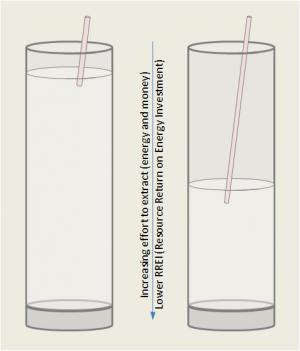
Fig 1. The mile-long glass
Drilling a hole in the desert and waiting for black gold to gush out is infinitely less complex than drilling a much deeper hole 5000 feet under water, as the public is now painfully beginning to understand. Many experts agree that we probably have used about 40-50% of recoverable oil. It is difficult to prove such numbers, but we may for a minute assume that this is true. For pessimists, this makes our glass half empty. For optimists, it remains half full. This has been the exact argument the energy community has been having, to little avail, so let’s play with that analogy some more: our oil reserves can be compared with a 1 mile deep glass full of our favorite drink. Getting the first sips is easy. Whenever we are thirsty, we lower a straw into the fluid and drink as much as we like. After a while, that straw might become too short, so we have to find a longer one. Not really a problem. We might even get better at making straws for a while. And so it continues.
But once we are half a mile down into this huge glass, the straw will be so long that one might need help to even hold it, and we will most likely require help to suck hard enough to make the fluid come all the way up. What has happened? We still have half of our favorite drink left, but the efforts to get to it are becoming increasingly painful, significantly diminishing the net benefit of that next sip. And so we might (have to) give up drinking long before the glass is empty, just because its too difficult to get at the fluid in a meaningful way, and because the effort of sucking eventually exceeds the benefit and joy from each sip.
The concept behind our "mile-long glass" analogy unfortunately applies to almost every raw material and energy source we are currently using. The more we have extracted, the more difficult it becomes to get to the next unit. Our organization (IIER) looks at this phenomenon using the term "Resource Return on Energy Investment" (RREI), which is based on established approaches used for Energy Returns on (Energy) Investment (EROI). It describes the amount of effort (energy) needed to get one unit of a resource we want to extract. To extract the next unit, our effort typically increases compared to the past, as we have mostly exploited the easy finds and must pursue the ones that are further away, harder to get, more difficult to secure politically, or any such combination. Over time, this increasing effort makes the production less and less useful to societies. Or to use our drinking straw example: at one point sucking out more from that glass exhausts us so much (e.g. the energy invested per sip becomes so big) that we will have to stop our effort and turn to something else, or - if there is no equivalent alternative - drink less.
When looking at RREI, almost all resources currently used in human processes show declines. Less "easy oil" means that we have to drill in hostile environments deep under the surface of oceans, lower ore grades mean that we have to move four times as much rock to extract the same amount of copper when compared to a couple of decades ago, and the depletion of groundwater sources translates to getting drinking water from desalination plants or from fossil (non-renewable) aquifers far away, at much higher energy cost.
This decline in easily extractable resources and the increased effort to retrieve them is much more important than the exact year when peak production of a particular resource actually occurs. It is today’s reality, and helps explain why we are drilling at the bottom of the ocean at depths where no human being could survive for even a second.
Renewable energies - the fake fire brigade
So while some haven’t really recognized that we will soon run into serious problems from traditional fossil fuels, others are already preparing a “brighter future”, which will bring independence from coal, oil and gas, with far lower carbon dioxide emissions to boot. In many European countries, thanks to subsidies and purchasing guarantees, large amounts of renewable electricity generation capacity has been built during the last decade, and in the U.S., corn based ethanol now has a government-mandated share of up to 10% in fuel gasoline. But let us not fool ourselves: during those 10 years, despite all the relative successes, renewable energies (including hydropower) grew by far less compared to the global increase in total energy consumption. Overall, our global energy delivery system continues to be as dependent on fossil fuels as ever before, or even more so. On top of that, even those renewable technologies are mostly based on fossil fuel inputs, which are either used during the manufacturing of the equipment, or even during production and processing (e.g. biofuels).
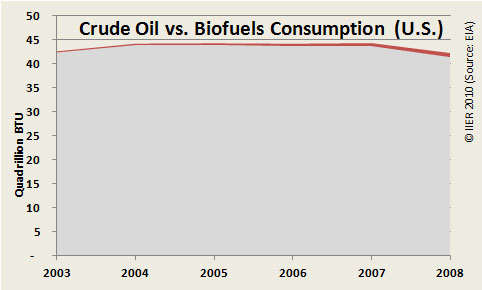
Fig 2. Biofuels (red) vs. crude oil (gray) consumption in the U.S. (EIA)
One of IIER’s key objectives is to understand what the future of energy delivery systems will look like. We know that we will have to face a future with less and ultimately no fossil fuels. The question remains how to prepare for this eventuality. Most technological optimists believe that this challenge can be met with some combination of biofuels, renewable electricity generation technologies, electric cars, smart grids, and many other investments. However, when we examine these technologies more closely, none of these so-called “solutions” come close to providing any relief, quite the contrary.
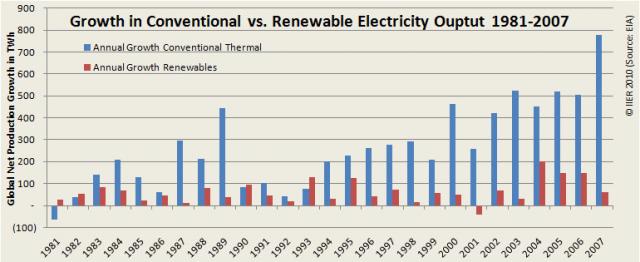
Fig 3. Growth of Renewable (incl. hydro power) vs. Fossil Fuel Generation 1981-2007 (EIA)
As Robert Rapier, a well-respected energy analyst, puts it: “We are running out of traditional energy sources, which can be compared to our house being on fire. While that happens, many people linger around the burning building and pretend to be firemen, mimicking their actions, carrying some equipment, shouting commands - but actually they have no real water, no real skills, no appropriate tools. That way your house will burn to the ground because the “real” firemen never showed up, as everybody thinks there are more than enough firemen on site.” This is exactly what it is: when taking a closer look, most - almost all - of the renewable energy technologies promoted today won’t solve any of our future energy problems. Let’s get into the details using two examples. Renewable electricity generation, and biofuels. In order to keep this article halfway short, we will only make the general case, but we are happy to back up our claims with hard facts.
The future of electricity – a shaky one
Today’s electricity grids are key building blocks of modern civilizations. Advanced economies depend on the reliable and discretionary delivery of power to every single socket. Our way of living, which includes the ability to read this article, wouldn’t be possible without. Unfortunately, delivering stable electricity poses a significant challenge to grid operators, as energy production and consumption in any moment need to be matched explicitly. Storage is expensive, technologically complex, and always incurs losses, which is why power grids have become the perfect example of just-in-time supply chains. Whenever there is growing demand, additional power generation capacity comes online within seconds, and likewise, falling demand leads to the immediate withdrawal of an equal amount of generation capacity.
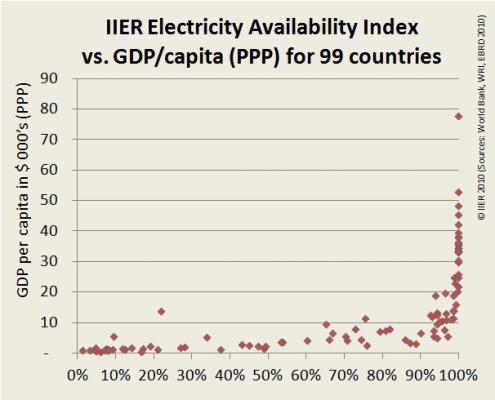
Fig 4. Electricity Availability versus GDP per capita
Having access to stable power grids seems to be positively correlated with economic output as IIER’s EAI (Electricity Availability Index) shows. It is based on availability (percent of population with access to electricity) and reliability (number and duration of blackouts). When looking at the chart, it becomes obvious that it seems almost impossible for a country to arrive at a per-capita GDP significantly above US$ 10’000 (2007 dollars, adjusted for purchasing power parity) in environments where electricity isn’t a stable and reliable commodity. When thinking about it, this isn’t so surprising, as most industrial and commercial processes require stable electricity in large quantities, and its absence simply makes many things impossible.
Right now, all our electricity delivery systems are almost fully controlled from the supply-side, i.e. no usage restrictions apply, which is why we benefit so much. Customers don’t have to pre-order a certain amount of electricity before they can turn on a machine, a computer, or start cooking, but instead just do so, mostly oblivious to the fact that someone somewhere in a grid operations center will turn on a gas turbine, or let some water flow downstream, just because we flip a switch. A preliminary analysis conducted by IIER shows that less than 10% of electricity demand can theoretically be supply-controlled without severely impacting societies. Computers, machines, air conditioners, stoves and ovens, and most other industrial and household devices are those things we want to use when we need them. But even where grid operators theoretically could shift certain electricity uses to off-peak times without disrupting our lives, this comes at the significant price of introducing a smart grid infrastructure, and new devices capable of being controlled remotely. Another fake fireman.
Thus, no matter how hard we try, electricity systems will continue to rely mostly on supply side adjustments. Today, this is manageable, because most sources are either providing steady power flows (such as coal, nuclear or run-of-river hydro power plants) or then they are mostly controllable (such as gas fired power plants or hydropower from dammed water pools). With that mix of inputs, electricity on demand becomes possible for most advanced economies. Additions of wind and solar power over the last decade introduced renewable electricity generation technologies into the grid. Those two sources have none of the above qualities: they neither provide steady flows, nor are they controllable. “No wind” means "no power", so does “no sunshine”, and even sharing across long-distances using high voltage DC (HVDC) transmission lines won’t change that fact, due to the stochastic nature of the inputs. Potentially crippling power outages will happen regularly in societies that rely on large percentages of these technologies to meet their electricity demand. With that, the current system of just-in-time electricity delivery would be replaced by one with irregular service interruptions. And yet there are plans made worldwide suggesting that we can produce 20, 30 or 50% of our future electricity consumption from those two sources. This is self-deception at best, and a lie at worst, as it is simply impossible to manage delivery systems where both inputs and outputs are largely uncontrollable, irrespective of other features added.
What is important here: we’re not talking about a future where renewable energies supplement fossil fuel based electricity systems like they do today. Given sufficient backup generation systems powered by fossil fuels, a larger penetration of renewable electricity is definitely possible, and might reduce carbon dioxide production and other externalities, albeit at a horribly high cost. However, these types of add-in systems fail to break our dependence on fossil fuels and don’t prove that we can deliver stable electricity in a world where renewable sources supply a majority of inputs into electricity grids. If that was the objective, we should be honest and just build some wind turbines and match them with gas fired generation capacity for low-wind times, instead of talking about long distance transmission, smart grids, and other technologies that despite their cost don’t have the potential to secure the basic objective: stable power at any time.
Someone in the renewable electricity world would probably argue that this is where storage can play an important role. Unfortunately, again, this is more self-deception. Right now, storage that balances renewable sources comes from the flexibility of other stock-based supplies, such as natural gas and hydropower. They can be turned off when the wind blows, and turned on when it stops. The reason why this works is because renewables have such a small market share and often use much larger backup systems. Denmark for example operates its heavily wind-based electricity system with the backing of comparably huge hydro power plants in Norway and Sweden, an approach which unfortunately isn’t scalable globally. Not many countries have neighbors with flexible energy generation capacity ten times their own, and that is about what is needed to buffer the huge long-term variability of renewable electricity generation.
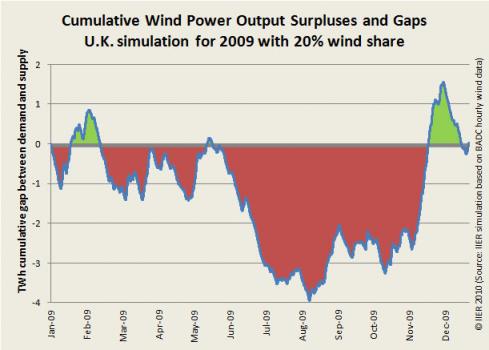
Fig 5: Annualized gaps and surpluses from wind (UK simulation)
So let’s for a minute assume that the United Kingdom - one of the world’s "best" places to generate electricity from wind - runs on 20% wind power as planned in the least ambitious scenarios currently promoted, and that standby natural gas power plants become no longer available to bridge supply gaps. Some say that ELVs (electric cars) could provide the necessary storage capacity. We did the maths: the total annual output from wind in a 20% scenario for England and Wales would amount to approximately 64 TWh (20% of total current demand). After modeling a nationwide wind turbine network using the best 50 locations (we even included Scotland), we calculated the necessary storage to bridge the largest possible supply gap (e.g. when the wind doesn’t blow for a number of days) and found that Britain in 2009 would have needed 96.5 million battery operated electric cars with 40 kWh batteries each fully available for storage, e.g. no longer ready to be driven. For comparison: 28.5 million private vehicles are currently registered in the UK. The problem here is that wind patterns don’t just include short term ups and downs, but instead do involve long periods with very little wind, and then long periods with a lot. Unfortunately, this pattern isn’t even predictable year-over-year. Buffering those resources is not something that can be managed with storage, no matter how large. Another fake fireman.
The truth about electricity is simple, surprising and daunting: with the most promising renewable technologies - wind and solar - irrespective of expensive supplements being added, electricity systems as we know them today will not be able to operate. But instead of putting efforts towards finding real solutions, we are spending billions, likely even trillions, of dollars and Euros on technologies that cannot and will not work in the way we expect them to. Again, as a reminder: this is not an argument to defend the way we currently produce electricity, but a strong encouragement to research how we might get reliable power to our ubiquitous sockets without fossil fuels providing the major part. And for those who now suggest to go for a nuclear option: irrespective of any argument about long-term risk, this technology too has a number of downsides, among them the inability to control output according to demand, relatively high cost, and a high dependence on fossil fuels both for the construction of plants and the mining of uranium. And last, but not least, the fact that uranium too, is a non-renewable resources, subject to the fact that we will eventually arrive at the limits of meaningfully extractable material (e.g. the ones offering an attractive RREI) - particularly if we plan on scaling up nuclear power to replace other fuels.
Combustion fuels – headaches all over
The other big challenge ahead lies in fuels used for transportation and heating, mainly in oil. This is the place where scarcity is most apparent, as described above. We wouldn’t try to drill in deep water or extract oil from shales if it wasn’t for the inability to find and explore easier and cheaper sources. What this has done, at a minimum, is lifted the cost of oil to above 70 US$ a barrel, about three times its inflation-adjusted long-term average price. This is not because of speculation, as some claim, but just because it costs 60-70 US$ to extract those least attractive sources. Thus, we truly have to start thinking about alternative ways to move our cars, trucks, planes and even tractors.
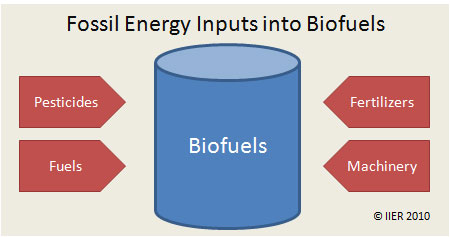
Fig 6. Fossil fuel inputs into Biofuels
The easy way out would be electric vehicles, but after reading the above paragraph on electricity, this might not be an entirely safe bet. And that doesn’t even take into account the still existing technology and cost problems with battery technology.
One of the many challenges of a number of renewable energy technologies is that they are themselves heavily dependent on fossil fuel inputs. This is true for raw material extraction and manufacturing of solar panels, wind turbines and other things, but even more so for many so called “green” fuels. Significant inputs to the production process of biofuels - for example of corn based ethanol - come in the form of oil (fuels, pesticides), coal (electricity) or natural gas (fertilizer). This has two consequences: first, it doesn’t break our dependence from fossil fuels and second, as fossil fuels become more expensive, so do these "alternatives".
However, one of the biggest challenges of all renewable (green) fuels is their limited availability. There simply isn’t enough biomass potential in any Western society to produce a sufficient amount of non-fossil combustion fuels that could meaningfully replace what fossil fuels we use.
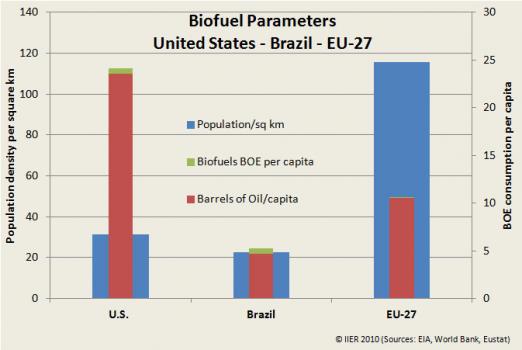
Fig 7: Biofuel parameter comparison
Brazil, which is often used as the poster-child of biofuels production and use, provides a stark reminder that building an oil-independent society with biomass-based transportation fuels is nothing but a dream. In 2008, Brazil produced (and mostly consumed) approximately 163.5 million barrels of ethanol. In the same year, the country consumed 907 million barrels of crude oil. Given the lower energy content in ethanol (3.53 MBtu per barrel vs. 5.8 MBtu for oil), biofuels had a share of not more than 9.9% of the two, while crude oil provided 90.1% of the total energy in liquid fuels. So much for Brazil running on renewable biomass. But that is just the beginning: when taking into account that Brazil is an emerging economy, and one of the least densely populated countries, the problem becomes even more obvious. With approximately 0.51 BOE (barrels of oil equivalent) per capita, the U.S. produced about exactly as much biofuel per person as Brazil did (0.52 BOE/capita). The only difference was that overall consumption of oil and biofuels together was 4.6 times larger in the U.S. when compared to Brazil, and twice as large in Europe (EU-27). Europe however, has yet another handicap limiting its ability to go for biomass. It has about 3.6 times as many people per square kilometer than the U.S., and about 5 times as many as Brazil, which constrains the continent’s ability to grow enough biomass for biofuels and feed all its people at the same time.
So in a nutshell, there is no such thing as a replacement for fossil liquids coming from biofuels, instead this is just one more of those fake fire brigades.
A true plan for the future – begin from the other end
All of today’s planning efforts take place based on today’s energy delivery systems. We add some renewables to the current mix and see how we can manage. When we see that this causes problems, we respond by adding highly complex and costly bells and whistles. Alternatively, we start introducing new technologies that will never be able to truly scale up, are in fact heavily dependent on fossil fuel inputs, or both. We would go so far as to say that we can safely prove that more than 90% of energy system alternatives discussed and introduced today have no potential of helping us to secure a longer term energy future.
We are thus not sure if it is a good idea to put all of society’s efforts into fixes and add-ons to today’s energy delivery and consumption systems, but instead we strongly recommend the development of approaches and technologies that radically break with a fossil fuel base. The only meaningful way of looking at the future of energy delivery and application technologies would be to build energy systems based on an assumption that renewable technologies have to provide the entire amount required by our societies, and then to reshape societies so they are in line with what and how these technologies can deliver.
Only when applying this (what is probably considered radical) view, we would be able to model a sustainable and reliable energy future. Once we have figured out how this can work, we may still consider how to make the best use of our remaining fossil fuels, but going the other way will just fool us into believing that we have solutions, until we recognize we don’t. And today, to be frank, this is exactly where we are. A lot of fake firemen are standing around a fire that is right now openly breaking out.
IIER puts substantial effort into trying to understand what energy systems could work in the long run. But unfortunately, very few other people do so, which is something we want to change. Instead of spending billions or even trillions on amendments that most likely won’t help, a significant portion of these investments should go into a completely new design of our energy future. Let’s finally bring in the real fire brigade.
Resources and links
Link - An impressive review of past presidents' committments regarding the U.S. energy future, by comedian Jon Stewart
FTSE 100 falls to 10 month low on global worries
Miners and banks once more led the market lower as worries about a global downturn sent investors rushing for the exits.
With copper hitting a one week low after fears of a slowdown in China and poor US consumer confidence figures, six of the top ten fallers in the FTSE 100 were mining groups. Rio Tinto fell 208p to £30.48 while Xstrata lost 58.7p to 908.7p and Eurasian Natural Resources Corporation closed down 54.5p at 893.5p.
Ahead of the repayment on Thursday of €442bn of loans from the ECB to a number of European banks, the whole financial sector was also under pressure. Barclays fell 18p to 267.35p, while Royal Bank of Scotland dropped 1.68p to 41.77p and Lloyds Banking Group lost 1.6p to 53.81p.
With European markets down more than 3% and Wall Street 235 points lower by the time London closed, the FTSE 100 fell 57.46 points to 4914.22, its lowest level since early September last year. There was not a single riser in the leading index. In the past six trading days the FTSE 100 has lost more around 380 points, wiping almost £100bn off the value of Britain’s top companies. Giles Watts, head of equities at City Index said:
Just as the market was hoping for something to spark a bounce from the day’s lows, clients were hit with a sucker punch as a worse than expected consumer confidence number hit the wires. Clients seem particularly concerned at the negative trend being set from US macro data after last week’s disappointing homes and employment data.
As investors struggle to find positives in the market, concern remains over how much lower we could go. With the FTSE now trading just above 4900, many see the market teetering just above significant technical levels of support which if breached could see much more aggressive retracements round the corner.
Vodafone fell 3.75p to 142.25p as Credit Suisse cut its recommendation from outperform to neutral, while support services group Serco slipped 20.5p to 603p despite an upbeat trading statement and comments that it should benefit from the government’s squeeze on public spending. But Panmure Gordon issued a sell note, saying:
Serco remains a quality operator but with a full valuation and after strong performance, our stock preference remains elsewhere.
Still with the sector, social housing group Connaught dropped another 27.8p to 107.2p following Friday’s late profit warning, with analysts unimpressed with a conference call with the company yesterday.
Shares in Lord Harris’ Carpetright closed 70p lower at 640p. Full year profits rose from £16.7m to £22.3m but this was below most expectations, and a doubling of the dividend to 8p also fell short of forecasts.
Salamander Energy slid 14.2p to 226.3p after the exploration and production company announced it was plugging and abandoning the Tom Su Lua-1X exploration well off Vietnam after it found no hydrocarbons. Salamander said the well was always viewed as high risk, and it still planned to drill other exploration wells in the region.
PartyGaming lost another 12.4p to 230.1p as the California senate began discussing legalising online poker.
Lower down the market Immunodiagnostic Systems Holdings added 76p to 680p after US regulators approved its automated immunoanalyser, allowing the company to target the large US medical laboratories.
- Market forces column
- Rio Tinto
- Xstrata
- Eurasian Natural Resources Corporation
- Barclays
- Lloyds Banking Group
- Serco
- Carpetright
- Royal Bank of Scotland
- Vodafone
- PartyGaming
FTSE loses more than 3% as Wall Street slides on confidence data
The market rout is in full force after disappointing US confidence figures added to worries about European sovereign debt and slowing global economic growth.
Wall Street has plunged 260 points, dragging the FTSE 100 down 166.14 points to 4905.54 - its lowest level since May 25. The latest sign of a global slowdown came from a US consumer confidence index showing the worst level for 7 months. Rob Carnell at ING Bank said:
June’s Conference Board consumer confidence index has just plunged to 52.9, taking the index down to levels not seen since last November. The size of the fall was also huge, with the index falling almost ten points from 62.7 in May. We saw a similar fall in February – which wasn’t reflected by other confidence surveys (the University of Michigan index for example only fell slightly back then), so we might not want to jump the gun before we see some confirmation elsewhere (final June Michigan figures were actually slightly higher).
But if there is some genuine substance to this decline in the Conference Board’s survey, then it spells two things 1) real personal spending, which has been showing some signs of slowing down, might slow sharply. And 2) the labour market may not be improving as fast as markets would like (non farm payrolls is out this Friday…)
Shares have been unnerved all day on signs of demand slowing in China, not to mention fears about banking debt ahead of a repayment of €442bn of loans by European banks to the ECB due on Thursday. There are also concerns about how much the European austerity packages will hamper growth - prompting the question of where economic growth is now actually going to come from. The G20 meeting seemingly had no real answers, and if Chinese demand does slow, then the hope of a bailout from that quarter looks less likely.
With no risers in the FTSE 100, banks and miners are the main fallers as investors run from risk and commodity prices slump on the China fears. Rio Tinto is now down 195p at £30.61, while Eurasian Natural Resources Corporation is off 57p at 891p. Among the banks Barclays is the biggest loser, down 17.2p at 268.15p.
Yields on US 10 year Treasuries fell below 3% for the first time in more than a year, while the euro lost nearly 1% to $1.2170. The risk premium on southern European bonds widened against German bonds. David Buik at BGC Partners said:
Now that investors suddenly feel that they can no longer rely on China to bolster recovery in the same manner as they could before, sentiment has taken a knock. Couple these Chinese problems with real concern over bank stress tests and the fact that sovereign debt could well continue to damage the banking sector’s health in certain quarters, it is hardly surprising confidence has taken a bashing and that appetite for risk has dissipated.
- Barclays
- Rio Tinto
- Eurasian Natural Resources Corporation
JP Morgan punts the prospect of an Exxon bid for BP
Amid all the speculation about the future of BP, and indeed the future of chief executive Tony Hayward, following the Gulf of Mexico disaster, comes a report suggesting the possibility of a bid from Exxon Mobil
In a note knowingly entitled Fantasy M&A, analyst Fred Lucas runs through the possibilities and comes up with the idea of a 473p offer from Exxon, valuing beleagured BP at £89bn. Lucas begins:
It is early February 2011 in Irving (TX) and Rex Tillerson, CEO of Exxon Mobil, has just concluded a marathon board meeting ahead of the corporation’s Q4 results. Exxon Mobil normally beats Q4 expectations. He would confirm that the integration of XTO was a success. The board meeting had been lengthened to address a topic that had been vexing Rex and his colleagues for many months – the future of BP.
It goes on in this vein for a while but the more serious stuff follows:
Although the ratings of its peers have been negatively impacted by this event, BP’s rating has suffered most – this has opened a large rating differential between BP and potential acquirers.
In theory, either Exxon Mobil or Royal Dutch Shell could consider a bid for BP. We focus on these two names because they have similar business models and similar global asset structures. They also bear the lowest political risk to a potential combination with BP.
We do not consider Gazprom to be a realistic interloper – it suffers BP’s very problem, a very low stock market rating. It lacks the balance sheet firepower and appropriately rated equity to consider such a large transaction.
Although a Chinese buyer such as PetroChina could potentially muster the financial firepower to consider such a large transaction, in our view it would encounter major political barriers given its controlling shareholder – the Chinese government.
Without ruling out the potential for a counter-offer by Royal Dutch Shell (perhaps encouraged by Europe’s political desire to preserve its status in such an important industry), this note focuses on the possibility of a move by Exxon Mobil because Exxon Mobil has the largest rating advantage and strongest balance sheet of the two.
And then we move to the valuations, after a caveat:
We must emphasize that this is our idea and it is only an idea. It is an idea that has been prompted by the gap between the current market value of BP and the intrinsic value that we see in BP. Furthermore, neither BP nor Exxon Mobil, nor any other potential participant in industry consolidation, has made any public statements on any such potential combination. Exxon Mobil does not have to do this deal. However, our analysis shows that it could capture significant value for its shareholders were it to do so.
Lucas then splits out how a deal could work:
• Cash: $50bn cash or 178 pence per BP share (38% of offer value).
• 1.0 share in BP Downstream – tentatively valued at $50bn or 178 pence per BP share (38% of offer value). Subject to the precise mechanics of such an offer, this entity would have to be returned to BP shareholders at a later date post-merger completion.
• 0.02892 Exxon Mobil shares per BP share – this equates to 543m new Exxon Mobil shares with a current market value of $32bn (24% of total offer value).Under our scenario, we believe the economics of such a potential combination are compelling, and we question why the market is not factoring in the possibility of it ever happening. We feel that the capital markets have become too focused on the downside risks to BP related to potential Macondo liabilities and its liquidity implications for BP.
In our view, the market has lost sight of the intrinsic value that is resident in an asset-rich company like BP. We very much doubt that keen-eyed industry players have lost sight of BP’s value. In many respects, an accurate valuation of BP today depends less on a valuation of its assets, but more on an accurate value of its potential liabilities. Who knows better how to price potential clean up costs and associated civil claims than Exxon Mobil?
BP, by the way, is now down 6.85p at 301.4p, as Hurricane Alex looks set to hamper the company’s clean-up operations in the Gulf.
- BP