The World Gold Council welcomes the reauthorisation of gold trading with foreign counterparties in Vietnam
The World Gold Council welcomes the reauthorisation of gold trading with foreign counterparties in Vietnam
The World Gold Council appoints Takahiro Morita to lead its activities in Japan
The World Gold Council, the market development organisation for the gold industry, has appointed Takahiro Morita as Regional Director for Japan with immediate effect.
European central banks halt gold sales
26 September 2022 marked the end of the second year of the third Central Bank Gold Agreement (CBGA3). European central bank signatories to the agreement sold a gross 1.1 tonnes of gold during the year, the lowest annual sales since the agreement began in September 1999.
Food Commodities
 By Richard Romando -
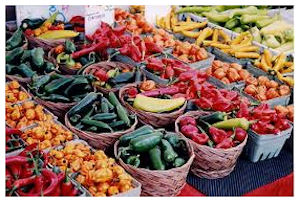
Food commodities are traded to international markets across continents and distributed to reach remote places also. The food commodities are ranked based on availability productivity, and demands of the increasing population. Non-processed food items such as whole grains, pulses, spices, cashews, frozen foods, fruits, vegetables, milk, eggs and many more are food commodities that are traded to native or internal markets and international markets. Processed food commodities include edible oils, butter, cheese, cedars, fruit juices, sauces and all types of flours. The food industry is a multi-billion dollar business and the world’s largest industry.
Handling food commodities includes many important factors that cannot be ignored such as storage, shelf life and temperature conditions. Storage space requirements should be given careful attention, as the amount of space necessary in a warehouse depends upon the total volume of food stored and on the number of different commodities. Separate stacks require more usable volume than one large stack; hence, each commodity should be stacked separately. Shelf life refers to the average amount of time a product may be stored without nutritional deterioration. A food commodity can deteriorate for several reasons such as aging, microbiological decay, chemical and physical degradation and texture changes. Deterioration of food commodities can be reduced or slowed by careful processing, packaging, handling and storing. Universal guidelines for controlling temperature and humidity conditions to suit the various food commodities are impossible, because these conditions and the operating environment vary from place to place. However, some basic instructions can be followed such as keeping all food commodities in dry conditions, storing wet and dry foods separately, cross-ventilation in the warehouse, sunroofs and covering food commodities during transportation.
Besides food commodities being a profitable trading business, large quantities of food items are donated through food distribution programs as relief measures. The commodities required food programs use inexpensive food staples to provide basic nourishment to populations in extreme food security emergencies, as well as for development activities designed to address food security goals.
Commodities provides detailed information on Commodities, Commodity Future, Commodity Brokers, Commodity Trading and more. Commodities is affiliated with Savings Bonds.
Article Source: http://EzineArticles.com/?expert=Richard_Romando
http://EzineArticles.com/?Food-Commodities&id=428968
Will Silver Underperform in Near Future?
 By Kyles Humphreys
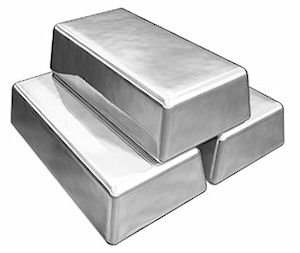
The study of silver unfolds the reasons why gold has a stronger position in market as compared to silver. In addition to that, it also reveals the reasons why gold prices are confidently skyrocketing when weighed against the trend of silver prices. The insight on the reasons, which are same for market trends of both the precious metals, makes us aware of why silver would underperform when compared to gold.
What’s more, this trend of gold prices ascending with a steady pace increases the price of gold concreting the bubble mentality in the gold market.
If gold was seriously bought as monetary easing hedge, it was evident for silver prices to increase as silver is considered as an immediate alternative for gold, especially when it comes to buying it. But, the fact is exactly opposite. The prices on gold are rising with a great leap while prices on silver are nearly steady or show mere increase. This trend has proved that the buyers of it are interested only in gold and not in any other metals such as silver even though it is considered as a precious with almost same status. The reason is, gold market has become a speculative market because of increase in prices on gold due to the concentration being focused on gold. And hence, the amount of rise in gold prices can not be considered as a real reason of switch in precious metals as a monetary alternative for investments.
Additionally, because of silver’s usage in industrial applications and processes more than it being considered as precious metal and hence a guaranteed way to park money, the gold will always outperform the silver. And so, its highly raging prices during recent times can not be ignored.
If prices on gold continue to rise due to uncertainty in equity market, silver is most likely to underplay due to its industrial usage. The usage of silver in industrial applications and processes contrasts the usage of gold as precious metal. So the economic downturn in silver prices is pessimistic. On the contrary, if gold market slowdowns due to change of trend in market of precious metals, silver will do worse than gold. The reason is, silver is not considered as significant as gold when it comes to precious metals market. This proves that there are more ways to lose on silver where gold has only one.
Selling the silver chunks is advised these days due to silver’s limited benefit in either a positive or negative scenario of precious metals market. In addition to that, the jeopardy/return characteristics of this silver trade are attractive.
Kyles Humphrey is a knowledgeable writer in silver market, mining & stocks, who periodically writes articles related to silver prices, silver spot price including tips on investment in silver. Please visit silverprices.com for more details.
Article Source: http://EzineArticles.com/?expert=Kyles_Humphreys
http://EzineArticles.com/?Will-Silver-Underperform-in-Near-Future?&id=6548529
Should You Be Investing In Oil or Oil Stocks?
 By Michael R Peterson -
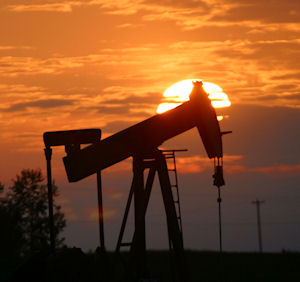
Over the past decade oil has become a very popular investment theme as demand from China and India as well as other developing countries has pushed demand up to the available supply. At the same time innovative new products such as the Oil ETF have caused a sharp rise in investor demand. As with other commodities the weakness in the U.S. Dollar is the underlying factor that has caused a rise in oil prices over the past decade. Should you be investing in oil? If so, what is the best way to start investing in oil?
The primary reason you would want to invest in oil is because you believe oil prices are going to rise over time. Cash oil prices have risen from a low of $10.80 in December 1998 to a high of $145.66 in July 2008 so anyone who purchased it in 1998 could have made over 1000% return on the rise in oil prices. The problem with high oil prices is that it puts extreme pressure on consumers and slows the economy which in turn causes demand to fall along with prices. These swings in demand with a fairly constant supply cause prices to move quite wildly which can be seen on a regular basis. During the 2008 credit crisis oil prices fell from the $145 high all the way down to $30 per barrel in a 7 month period, so it’s not a market for everyone.
For the average person who wants exposure to oil prices, it’s probably a better idea to purchase a basket of oil stocks (using a oil stock etf) instead of buying the actual commodity (using futures or an etf). The reason being that oil stocks tend to be less volatile than the actual commodity, also if oil prices don’t rise but simply remain where they are today ( $80-$100 ) the oil companies will continue to pump out strong profits quarter after quarter so stock prices can continue to rise. If you look back at comparisons of the price performance between USO (the most popular crude oil etf) and XLE (the most popular Oil Stock ETF) you will see that XLE has strongly outperformed USO since it’s inception and this will most likely continue into the future.
If you intend to trade crude oil prices on a short term basis you may want to trade USO or the leveraged long version from ProShares (UCO). You can gain exposure to the downside as well by purchasing the ETF - SCO or the ETN - DTO which both designed to rise as the price of crude oil falls. Most of these financial instruments are designed for short term traders and do not work well for long term investors. For long term holding it’s hard to be the performance of XLE.
For more information on investing in oil please visit our investment blog. We will show you several different options from purchasing oil stocks, futures or even an oil etf or etn. There are several different investment options to consider based on your objectives.
Article Source: http://EzineArticles.com/?expert=Michael_R_Peterson
http://EzineArticles.com/?Should-You-Be-Investing-In-Oil-or-Oil-Stocks?&id=6558048
Types of Gold Investments
 By Siradj Okta -
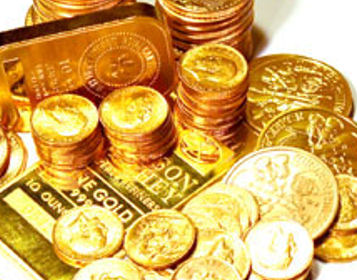
Investing in gold is unquestionably safe and profitable to a certain extent. Although the profit is probably not as high as that of stock shares, gold is not subject to the rise and fall fluctuation as the shares. In other words, gold investment is stable, not affected by any negative condition of politic or economy of a country. In general, there are a couple of the most common kinds of investments which are bullion and coins. To be exact, the coins are in the form of ‘certified rare gold coins’ and the bullion is in the form of ‘modern bullion’. Considering their size, both kinds of gold can be physically stored in a safe deposit box, and both products can become powerfully strategic assets.
The certified rare gold coins are the perfect choice for a long term investment. Because they are graded and certified by an authorized third party, the value is now getting higher. The rarer the coins, the higher the price, and this is why coin collectors would do anything to have them. With the legal institutions established to ensure the purity and authenticity of gold coins, a large network of authorized dealers has been maintained. This way, collectors must have secure collection of authentic and graded coins. Having the authentic and graded gold coins is really good for a long term investment with all the certification that goes along with them.
In contrast, when you are in a condition of needing a gold investment for a short term, then you are suggested to have the modern bullion type of investment. The modern bullion gold investment is said to be the perfect choice for short term investment because it is liquefiable throughout the world instantly and it has low purchase premium. This is made possible because the gold has been struck and guaranteed by certain leading companies. The liquidity worldwide and the low premiums are the reasons why modern gold bullion is the idyllic short term investment.
It was probably hard to imagine a long time ago that you can do a lot of transaction from home without actually looking at or having the commodity in hand. It even sounded impossible, especially with the famous jargon ‘cash and carry’. Today, although conventional markets do still exist physically, online markets are even more abundant and far larger, covering the entire world! Any commodity can be marketed and bought online, of course with the trust as the basis of the business. This also applies to gold. Whereas gold has been largely known as valuable commodity which is usually purchased in conventional market, it is now also available online.
Visit http://www.GoldDinarGuide.com for a completely FREE guide to gold dinar investing.
Article Source: http://EzineArticles.com/?expert=Siradj_Okta
http://EzineArticles.com/?Types-of-Gold-Investments&id=6520771
Trading in Crude Oil Futures
Crude oil is an important commodity which means that it’s an asset to be traded through futures contracts, royalty trusts, exchange notes as well as gas and oil exploration agencies. It is really not difficult to trade in crude oil, but one has to know about it before getting started.
Crude oil had been discovered first in the United States more than one hundred and fifty years ago. At the beginning of the twentieth century it provided about 4%, which is a small amount of the energy that was needed worldwide. This number has drastically increased these days to about 40%, which records for roughly 96% of the amount used in the transportation sector.
If you are looking at the opportunities for online options trading, then you might have come across terms such as oil futures option. Basically, this means has the right to but not the obligation to put (sell) or call (buy) one thousand barrels of oil for a specific future strike value.
Crude futures started trading in 1983 on NYMEX division and at present this is among the widely traded commodities worldwide. Futures really mean that you are trading the cost of oil at a much later date in the future. Investors will make speculations that the futures price will be lower or higher. Crude futures will trade for 30 successive months, in addition to futures with longer dates that were originally listed for 84, 72, 60, 48 and 36 months before delivery. Trading normally ends when the business closes on the third day before the 25th day in the month before the month of delivery. In the event that the 25th day is not a business day, then trading will end on the third day before the last day of business. For this reason it’s referred to as futures. In case you have a certain position towards the end of termination in that existing contract, you would have to take or make a delivery. This hardly ever occurs because 90% of the futures trades will be closed out prior to delivery.
Crude futures had been established primarily for the suppliers to hedge against their personal inventory. With a group of speculators thrown into the mix in order to soften the market, this result in different brokers calling out signals to sell and buy. In recent times this market has grown to be entirely electronic. There are computer programs that will allow you to carry out a trade from home.
As a result, futures and options trading involves a significant amount of a risk and will not be ideal for all traders. Earlier performance is not suggestive of the results for future trades.
Curious on how to become successful in business? Free downloadable materials awaits you…simply go to futures and options
Be astonished on how you can get high profits despite of recession go to http://onlinetradingresources.com
Article Source: http://EzineArticles.com/?expert=Tom_Fori
Is Nuclear Power Safe or Will Natural Gas Be the Energy of the Future?
The earthquake and resulting tsunami in Japan once again raises concerns about nuclear power as a safe source of energy. As Japan worked round the clock to prevent their nuclear reactors from having a meltdown, the whole world was watching. The debate about the safety of nuclear power was brought into the spotlight as radiation leaking from the damaged reactors contaminated food, sea water and drinking water.
Countries all over the world are taking a second look at their own nuclear power plants to determine if they could withstand a natural disaster of this magnitude. The Nuclear Regulatory Commission (NRC) is responsible for regulating nuclear power plants in the United States. Amidst public concern, the NRC issued a statement to let the public know they will begin reviewing all U.S. nuclear power plants to establish if the reactors could remain intact under similar circumstances as those in Japan.
Unlike other sources of energy, nuclear energy carries with it a stigma of danger and initiates an overwhelming fear after each nuclear mishap. Needless to say, the confidence the public had achieved about the safety of atomic energy was destroyed, once again, in the aftermath of the disaster in Japan. However, confidence is not the only problem the nuclear industry faces. The possibility of stricter regulations and delays in obtaining licenses for new reactors will also negatively impact the industry. Exelon has decided not to spend $3.65 billion originally slotted for nuclear plants; instead they will focus on gas, wind, and solar plants. NRG Energy Inc., the largest independent power producer in the U.S., has postponed orders for two 1,365 megawatt reactors that were planned for Texas.
As fear rises about the safety of nuclear reactors, the natural gas industry seems to be seeing an increase in demand. The $99 trillion natural gas industry has seen an 11% rise in futures since the disaster in Japan. Furthermore, tighter air pollution rules limiting carbon emissions for utilities being implemented by the Environmental Protection Agency may cause utilities to close some coal plants, driving up demand for natural gas.
Last year natural gas power plants provided 24% of the power supplied in the U.S. Coal was the greatest provider of power while nuclear plants were the third largest source of power at 20%. Two big advantages to using natural gas are its abundant supply which helps keep costs low and its stability. If coal plants begin to shut down and the U.S. turns to alternative energy sources because of concerns over the safety of nuclear power, natural gas will definitely be considered the future of energy in the United States.
Judith Ceja writes articles for TheJemReport.
For more information on energy or green technology go to http://www.thejemreport.com
Article Source: http://EzineArticles.com/?expert=Judith_Ceja